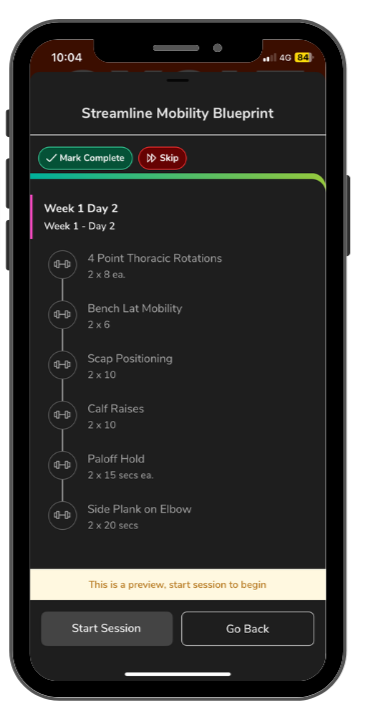
Streamline Mobility Blueprint
Good streamlining wins races. As a masters swimmer, maintaining an efficient streamline position can get harder with time and age. That’s why we created the Streamline Mobility Blueprint: a 4-week training program designed to improve your posture, flexibility, and body position in the water—so you can glide farther, faster, and more efficiently.
All for just £15

Unlock your streamlining potential
Over the years one thing keeps coming up: swimmers who can’t find a reliable, repeatable streamline are wasting huge amounts of speed every session. They train hard, but their bodyline leaks power.
That’s why we wrote this: a practical, no-nonsense resource focused specifically on the mobility pieces that let a swimmer hold a true streamline. This isn’t yoga for swimmers or a long lecture. It’s targeted drills, clear cues, and progressions you can do poolside or at home in under 10 minutes, plus a four-week plan that stacks adaptations week to week.
You’ll read why each joint matters, how they interact, and exactly how to fix the most common problems I see in Masters swimmers: shoulders that won’t lock out, a collapsed midline, and ankles that won’t extend on push-offs.
Follow this plan consistently and you will notice changes in your kick length, push-off speed, and how quickly you recover between reps — not just “mobility for mobility’s sake,” but measurable improvements in water.
The Physics: Why Streamline Wins Races
Swimming speed isn’t only about power — it’s power minus drag.
The streamline is the position that minimizes frontal area and turbulence, so the water flows smoothly past your body. Small changes in bodyline mean exponential changes in drag. A dropped chin, shrugged shoulders or a banana-shaped torso can add large amounts of resistance relative to the power you produce.
Think of the body as a boat hull: a smooth, narrow hull slips through the water; an uneven one throws wakes that slow you. The streamline is your hull. Mobility is what lets you shape and maintain that hull across turns, dives and the transition back into stroking.
Key takeaway: improving push-off length, maintaining a rigid core, and achieving full shoulder extension are not optional. They are the difference between a fast rep and wasted energy. That’s why this booklet focuses on the mobility chain that directly affects streamline: shoulders → thoracic spine → core → ankles.
The Mobility Chain: How Joints Interact
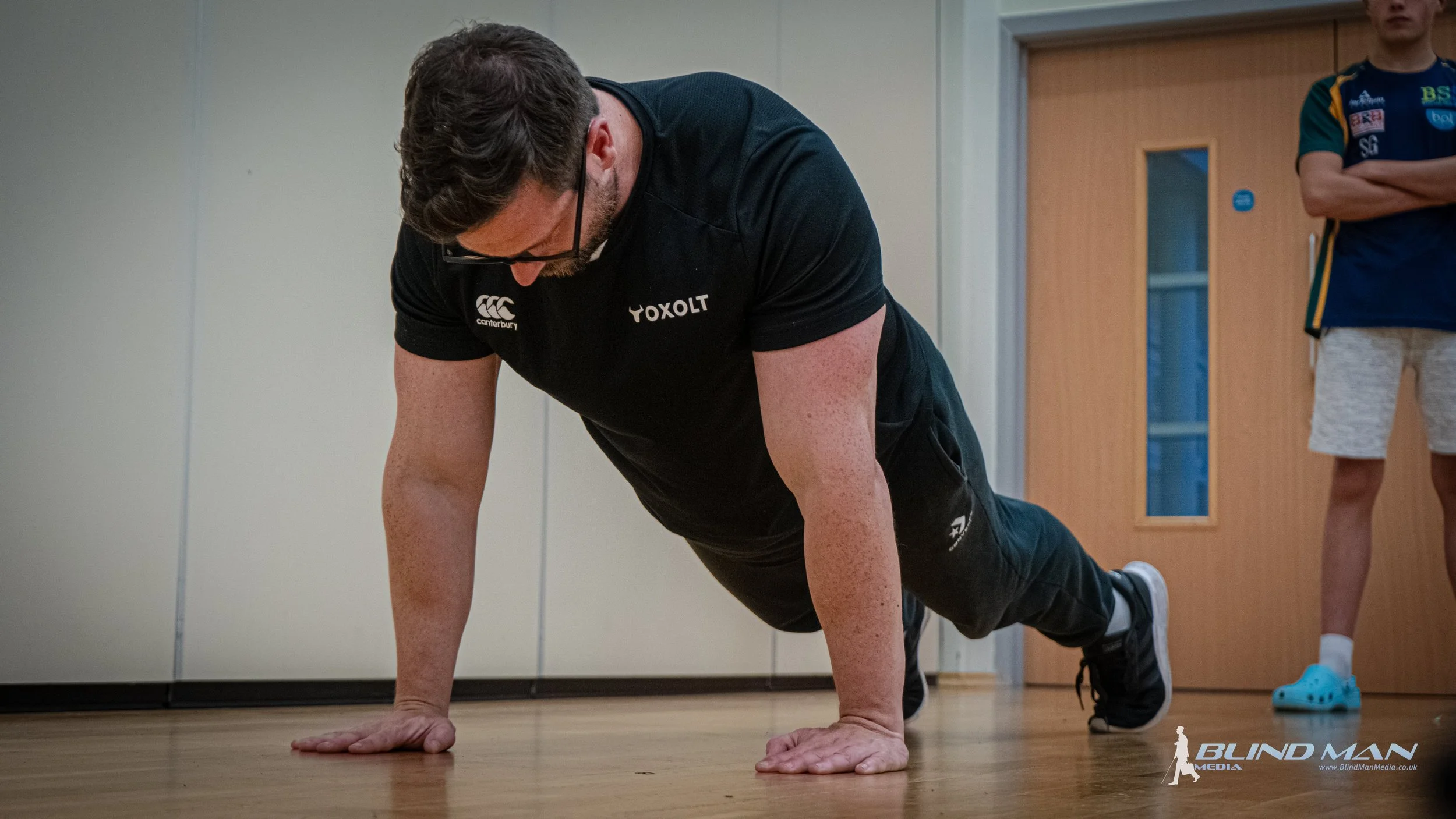
Mobility rarely fails in isolation. When one link in the chain is restricted, others compensate — and compensation = energy leak and injury risk.
Shoulders & scapulae provide entry and exit into the water. Limited overhead range shortens the catch and forces early re-entry. Thoracic spine (mid-back) controls shoulder orientation; if your thoracic extension is fixed, the shoulder has to overwork. Core control keeps the body rigid in streamline; weak anti-extension lets the hips sag into a banana shape under load. Ankles finish the chain: without plantarflexion you lose push-off length and the effective “toe point” that keeps you tight.
When these four work together, your streamline becomes effortless. When they don’t, you see early breathing, sloppy turns, and compensatory shoulder pain. The goal of this booklet is to give you targeted tools to restore range, train control, and reintegrate those gains into the water.

Shoulders & Scapular Mechanics
The shoulder is a trade: range vs stability. For swimmers, we need both. The scapula must glide on the rib cage, the rotator cuff must control head of humerus, and the pecs/lat must allow full overhead clear-and-lock. Years of training and desk work tend to lock the chest and co-opt the shoulder, producing a shrugged, short position that destroys streamline.

Thoracic Spine: The Forgotten Pivot
Thoracic extension is the “hinge” that lets the shoulders sit over the chest. If the mid-back is stuck, the neck and lower back compensate, producing a flexed or arched spine in streamline. Thoracic stiffness is common in Masters athletes who spend long hours sitting, driving and coaching.

Core & Bodyline Control
A tight streamline is a rigid, hollow corridor — not a sagging banana. The core’s job is to resist extension (anti-extension) and keep the hips in line with shoulders and ankles. Too much emphasis on sit-ups or “bracing” can actually create stiffness rather than length and control. We want control through full ranges: stable, long, and tight.

Ankles & the Final Link
Ankle plantarflexion and dorsiflexion both matter for swimmers. Plantarflexion (pointing toes) creates a narrow, hydrodynamic foot and maximizes push-off length. Dorsiflexion (knee over toes) is needed for starts and turns, and insufficient mobility will change foot position on kicks.
Mobility gains are only valuable if you use them in the water. That’s why every session should include a short poolside flow and direct transfer drills. Do the land drills before you enter the water, then reinforce them with specific pool drills. Example:
Poolside 8-minute flow:
Cat-Cow x 8 (spinal mobility)
Wall Streamline Reach 30s x 2
Foam Roller Thoracic Extensions 6 reps
Hollow Hold Streamline 20s x 2
Ankle mobiliser (kneeling shin stretch) 20s x 2
OXOLT Streamline Mobility Blueprint
The Streamline Mobility Blueprint is designed to fit easily into your week. Delivered through the TeamBuildr app, the program gives you 4 weeks of guided sessions, with 3 workouts per week.
Each session takes just 8–12 minutes and requires only your bodyweight and a resistance band—no gym or heavy equipment needed. Every workout includes:
A mobility flow to improve your range of motion and posture in the water
A strength and control drill to help you maintain a powerful, efficient streamline
Stick with the program, and by the end of 4 weeks, you’ll feel more stable, mobile, and streamlined in every swim.